

In this special edition of Policy Unpacked to mark Global Energy Independence Day, held annually on 10 July, Judith Rance, Head of Communications and Events, explains why it is it so relevant in Northern Ireland.
Global Energy Independence Day is an international awareness day focused on reducing reliance on imported fossil fuels and accelerating the transition to renewable energy. The day highlights the benefits of generating more energy from local, renewable sources such as wind and solar, strengthening resilience while reducing exposure to global energy shocks.
For Northern Ireland, the theme could not be more relevant.
In recent years, households and businesses have experienced how global events can impact local energy bills. Geopolitical tensions and international gas market volatility have all contributed to price rises that originate far beyond our shores.
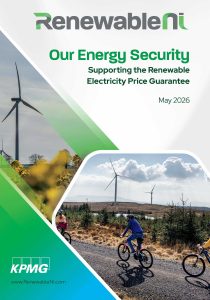
As the KPMG report commissioned by RenewableNI, Our Energy Security highlights, Northern Ireland remains heavily reliant on imported fossil fuels, leaving consumers and businesses exposed to decisions and events beyond local control.
 Energy independence starts at home
Northern Ireland possesses one of Europe’s strongest renewable energy resources, a mature renewable energy industry and a significant pipeline of projects ready to be delivered. What has been missing for almost a decade is the policy framework required to unlock that potential.
Since the closure of the Northern Ireland Renewables Obligation (NIRO), Northern Ireland has operated without a support scheme for renewable electricity. While neighbouring jurisdictions have continued to attract investment through schemes such as Contracts for Difference in GB and RESS in RoI, NI has fallen behind.
REPG: a foundation for energy security
This is where the Renewable Electricity Price Guarantee (REPG) becomes so important.
REPG is designed to support the deployment of new renewable electricity generation through competitive auctions and fixed price contracts. The objective is simple: increase locally generated renewable electricity while reducing exposure to volatile fossil fuel markets. By doing so, the scheme aims to improve energy security, provide greater price stability and restore investor confidence.
KPMG’s analysis found that REPG represents a critical opportunity to strengthen Northern Ireland’s energy security by stimulating indigenous electricity generation that is decoupled from international fossil fuel pricing.
The report concludes that delaying implementation risks prolonging exposure to volatile energy prices and undermining investor confidence at a crucial moment for the energy system.
Climate and the economy
Renewable electricity already delivers economic benefits by reducing fuel imports and lowering wholesale electricity costs. Analysis in Baringa’s Cutting Carbon, Cutting Bills report shows renewable electricity avoided £219 million in gas and carbon costs during 2025 alone, while helping retain over £1 billion in the local economy since 2022 that would otherwise have been spent on importing fossil fuels.[cutting carbon release ]
Our Energy Security report also highlights the wider economic opportunity. Achieving Northern Ireland’s target of 80 per cent renewable electricity consumption by 2030 could contribute an estimated £479 million in Gross Value Added annually while supporting significant employment opportunities across the renewable energy supply chain.
In an increasingly uncertain world, energy policy is therefore no longer just about climate targets. It is about economic competitiveness, consumer protection and long term resilience.
Global Energy Independence Day a timely reminder
Global Energy Independence Day serves as a reminder that energy security cannot be taken for granted. Nations that generate more of their own energy are better positioned to withstand international shocks, protect consumers and attract investment.
For Northern Ireland, the challenge is not a lack of renewable resources, expertise or ambition.
The opportunity now exists to put in place the framework needed to convert those advantages into secure, affordable and locally generated electricity. With the Renewable Electricity Generation Bill now introduced to the Assembly, REPG has moved from policy concept towards delivery.
Listening to our members
Speak to the RenewableNI policy team about the Economy Committee’s call for evidence on the Renewable Electricity Generation Bill.
Contact us
