
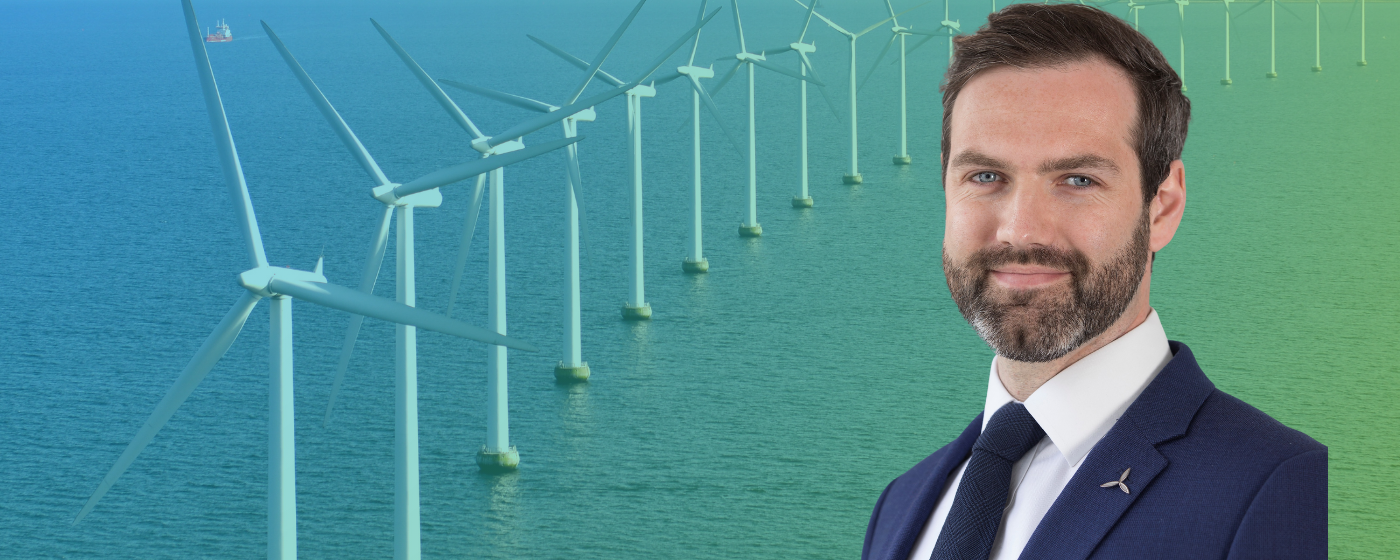
Mark Richardson took up post as the new RenewableNI Director in mid-November. In an exclusive interview after a fortnight in the role, Mark shares his career journey, his priorities for Northern Ireland’s renewable energy sector, and why he believes the region can regain momentum in the transition to clean energy.
First things first: tell us a bit about your background.
I was born in London and grew up in the West Country before studying Humanities at The University of Nottingham and spending time studying and working in India, the United States and China. Before moving into renewables, I worked across several industries, and I’m a long-time believer in the power of nature, reflected in my lifelong support of the greenest football club in the world Forest Green Rovers.
What drew you into this sector?
My early career took me through a range of roles centred on building relationships, navigating complex stakeholder environments, shaping consensus, and understanding how to bring different interests together.
I have always been passionate about unlocking solutions to challenges that reverse the impacts of climate change and protect our planet, people, oceans, and biodiversity for future generations.
 Over time, I became increasingly conscious of wanting to apply those skills in an area that really matters; something with long-term purpose. Quietly at first, I began exploring biomimicry design principles, hydrogen, solar- and sail-powered yachts, sustainable aviation fuels and circular material use. As I looked at whether truly renewable energy could support these innovations, I realised my calling lay in renewable generation itself.
I wanted to bring my passion for being outdoors, protecting biodiversity, and addressing climate concerns together with the transition to low-carbon technologies.
That path led me into the renewables sector and eventually to Scottish Renewables, where I worked across planning, onshore and offshore wind. It was a role that grounded me in the real challenges of project delivery, system change and policy complexity, but also in the enormous potential of the UK’s renewable resources.
As the new Director of RenewableNI, I feel the role aligns with my values and allows me to contribute to something bigger. It really powers me to make a difference here, pun intended.
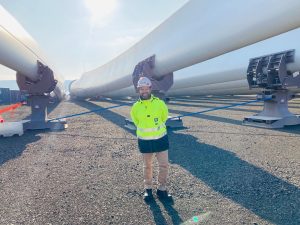 What lessons from Scotland do you think apply to Northern Ireland?
The biggest lesson is that progress happens when ambition, policy and delivery join up. Scotland has had its own challenges, but the system works when government, planners, networks and industry are aligned around shared goals. I have delivered coordinated action between industry and government to remove deployment barriers, whether onshore or offshore, so that renewable energy projects can proceed at pace.
My policy work to date has helped shape national planning framework reforms and marine regulations, creating clearer, more predictable routes to consent under frameworks such as the Onshore Wind Sector Deal and the National Planning Framework 4 (NPF4). Most importantly, I’ve shown how a strong industry voice and structured and timely engagement can rebuild investor confidence, the kind of certainty Northern Ireland needs now to attract clean power investment and drive economic growth.
Northern Ireland is absolutely capable of that same alignment. The similarities are striking: skilled workforce, strong wind resource, established developer base. The difference is that Scotland has maintained momentum, while Northern Ireland has experienced periods of policy uncertainty and slower decision-making.
The encouraging part is that Northern Ireland has previously demonstrated its ability to move quickly. The challenge is now rebuilding that momentum. There is a saying in Glasgow that ‘People Make Glasgow’, and I feel that’s true of Belfast and Northern Ireland.
What are your priorities in the weeks and months ahead?
The early months are about understanding, building relationships, and setting direction. I want to hear directly from members, policy makers, communities and system operators about what is working and what can be improved. Three themes have already come through strongly:
1. Planning has to be treated as a whole-system issue
Planning is not just a renewables problem. It impacts housing, infrastructure, investment and economic growth. Northern Ireland needs more planners, clearer policies, and faster decisions if we are going to unlock our potential. Outdated processes cannot hold back a modern economy.
2. REPG must now move quickly from design to delivery
The Renewable Electricity Price Guarantee is a significant opportunity to de-risk projects and rebuild investor confidence. But the scheme needs to move at pace. The next year is critical for giving developers the certainty to invest and build.
3. Grid capacity and connections need a transparent, credible plan
Dispatch down and grid delays are significant threats to meeting 2030 and 2035 targets. We need clearer timelines, more transparency, and a shared understanding of what is required. Northern Ireland has world-class wind resources, but without a modern grid, it remains underutilised.
What do you think will really accelerate progress?
Three key things stand out:
Clear, relatable communication
Terms like ‘net zero’, ‘carbon emissions’, or ‘sustainable’ can switch people off. The conversation needs to be grounded in what matters to households and communities: lower bills, secure energy, and cleaner air. When the benefits feel real, support follows.
Realistic pathways
Transition means managing all technologies, including oil and gas, as we build the new system. No one can simply flick a switch. Being honest about the journey and the timescales helps build trust.
Shared understanding across policymakers
Not every Member of the Legislative Assembly (MLA), planner or official is a renewable energy expert. If we want good, timely decision-making, we have to make the challenges clear, accessible and compelling. When people understand the scale of the opportunities and the risks of inaction, progress becomes much easier.
How would you describe your approach as Director of RenewableNI?
Curiosity first, then action. My instinct is always to listen, understand the landscape and bring people together around shared objectives. But once the path is clear, I believe in acting with momentum.
Northern Ireland has all the ingredients for success: resource, expertise, and ambition. What we need now is renewed clarity, honesty about the challenges, and a collective determination to move from policy to delivery.
What aspect of your new role are you most excited about and why?
I’m most excited about getting out across Northern Ireland and working directly with people, industry, policymakers and communities. I’m a people person at heart, and I’ve learned that the real breakthroughs come when you really listen to what’s behind what someone is saying. Building those relationships is where my skillset comes alive and where this sector can move fastest.

