

Renewable energy generation figures, published by the Department for the Economy today, show the continued decline in renewable electricity generation in Northern Ireland.
Electricity Consumption and Renewable Generation in Northern Ireland is published quarterly. In the twelve months to March 2026, 3,382 GWh of renewable electricity was generated from onshore wind and solar, 38.4 per cent of Gross Final Electricity Consumption.
RenewableNI Director, Mark Richardson said: “This follows a series of disappointing outputs from the Department, following the publication of the Energy Strategy Action Plan 2026.
“Today’s figures risk presenting a false narrative. While the headline figures may appear stable, the underlying reality is that Northern Ireland is not making progress at the pace required. We are moving backwards at a time when our neighbours are progressing.
“Achieving energy security is a critical strategic priority for governments across the world. Removing our exposure to volatile global fossil fuel markets is needed to protect consumers from price shocks and to sustain and grow the economy in Northern Ireland.”
Mark continued: “This decline is even worse than it may seem as formatting of these reports now includes electricity imported from GB as well as bioenergy. The change in methodology makes like-for-like comparisons more difficult and risks obscuring underlying performance.
“At a meeting with DfE officials yesterday, RenewableNI raised the importance of the Renewable Electricity Price Guarantee (REPG) for our energy security, to protect homes and businesses across the region and to increase investment in Northern Ireland.
“We raised concerns about the Action Plan 2026 and welcomed clarity on expected delivery by the end of the year and the continued aim to bring forward REPG to the Assembly before summer recess.
“We also raised planning reform delivery and grid connection reform as essential for the delivery of renewable energy. RenewableNI will continue to engage with the Department over the coming months.”
Mark concluded: “While Northern Ireland is rich in renewable resources, time is not one of them. It is vital we see policy action soon before the economy and NI citizens miss out on the renewable opportunities.”
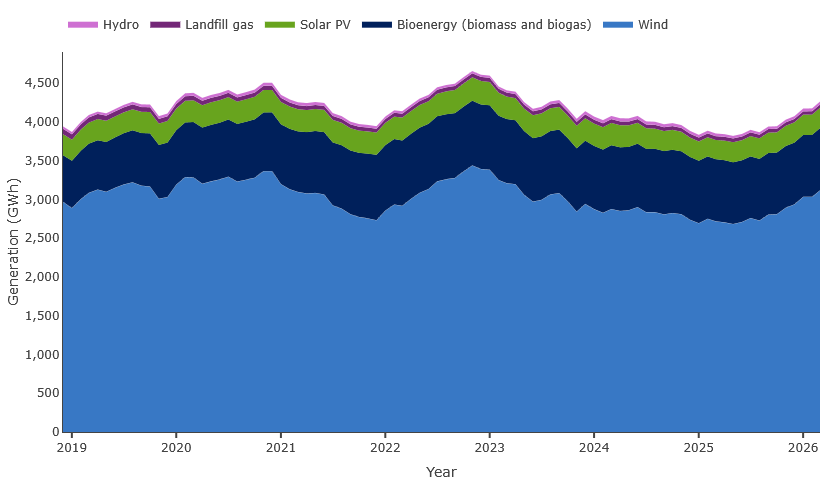
Renewable generation technology volumes (GWh)
Rolling 12-month volumes of renewable technology generation between December 2018 and March 2026.
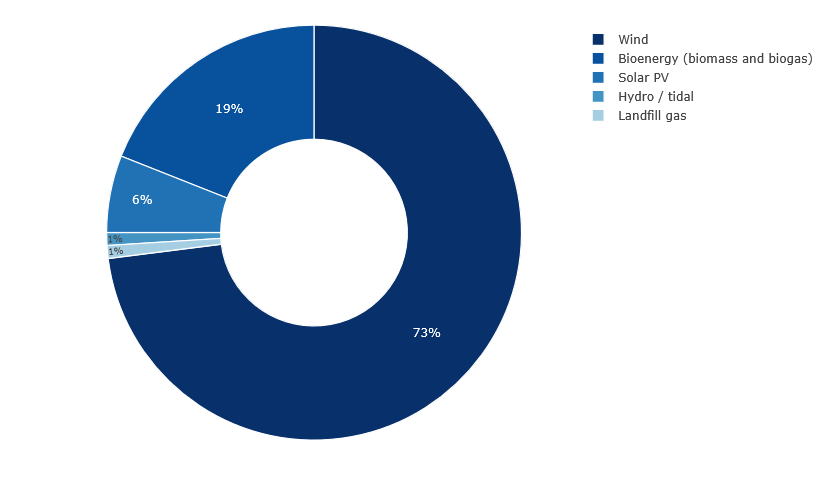
The majority of electricity generated from renewable sources within Northern Ireland comes from wind
Percentage contribution by generation type to electricity generated from renewable sources for the period April 2025 to March 2026.
For media inquiries please contact Judith Rance, Head of Communications and Events, RenewableNI, Judith.Rance@RenewableNI.com, 07875-681-794.
Notes to editors
- DfE Electricity Consumption and Renewable Generation Statistics report available at https://datavis.nisra.gov.uk/Economy/electricity-consumption-and-renewable-generation-report.html#4_Contribution_of_Each_Technology_Type_to_Total_Renewable_Generation
- Gross Final Electricity Consumption, which comprises generation plus imports minus exports, and is equivalent to total electricity demand, has fallen slowly but steadily over the period from 9,569 GWh at the year to December 2018 to 8,818 GWh in the year to March 2026.
Read the KPMG report, commissioned by RenewableNI, Our Energy Security – Supporting the Renewable Electricity Price Guarantee

