
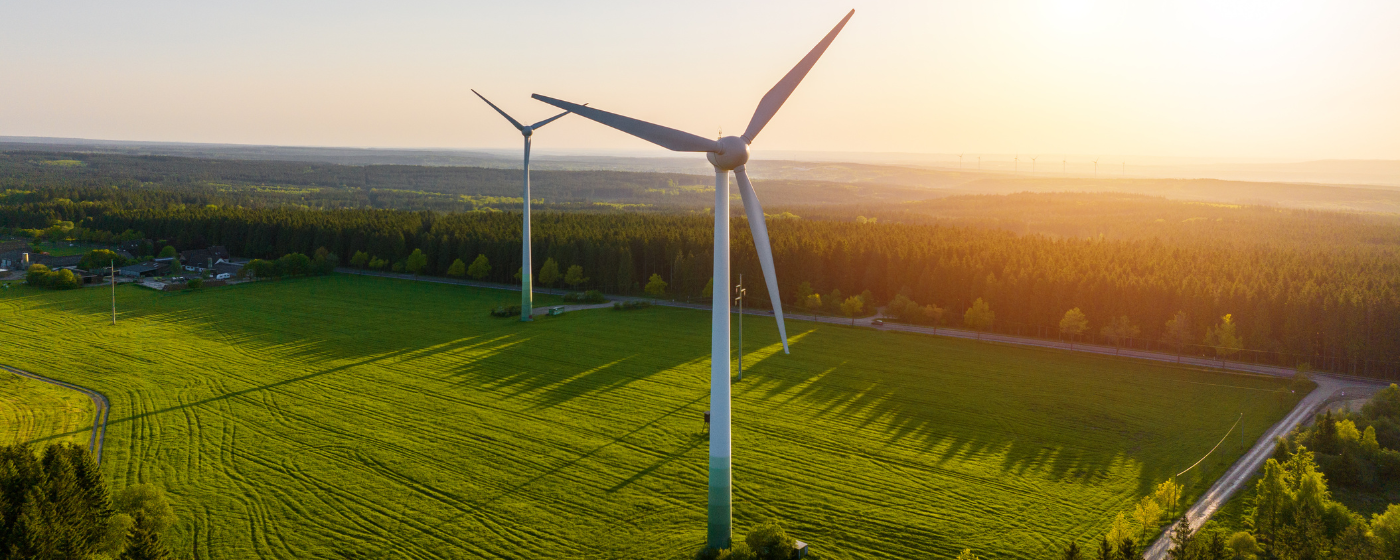
In this edition of Policy Unpacked, Madeleine Clarke explores the opportunities and challenges for onshore and offshore wind in Northern Ireland.
With strong and consistent Atlantic winds, Northern Ireland (NI) has some of the best wind resources in Europe. Historically, this has translated into NI’s early leadership in wind energy generation.
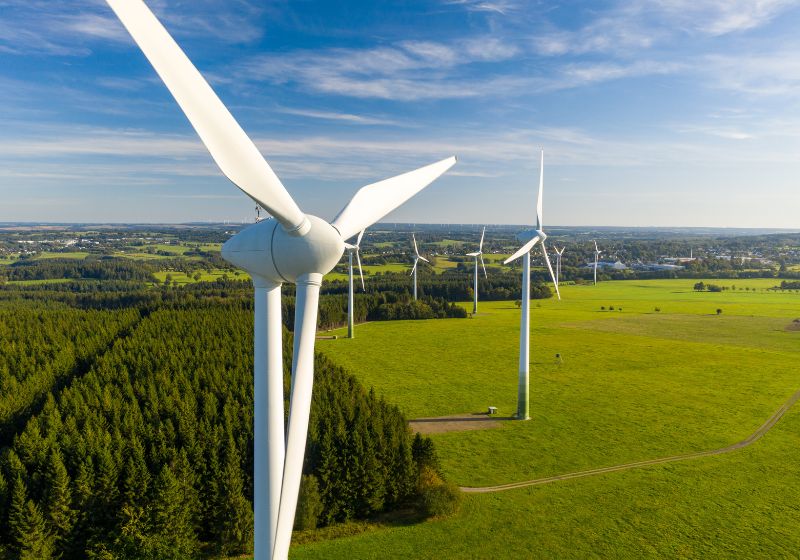
- In 2025, renewables accounted for over 40per cent of NI’s total electricity generation,
- The vast majority of this generation was accounted for by onshore wind generation.
With statutory targets to reach 80per cent renewables by 2030, there will be many more opportunities for the wind industry in the coming years.
NI has a unique position regarding energy policy. Energy is a devolved issue under the control of the NI Executive. A part of the United Kingdom but neighbouring the Republic of Ireland, NI’s electricity system is physically linked to Great Britain’s through interconnectors but is integrated with the Republic of Ireland’s through the All-island Single Electricity Market (SEM). This ensures competitive, secure, and efficient electricity supply.
Renewable Electricity Price Guarantee (REPG)
The big opportunity in the coming year will be the introduction of the Renewable Electricity Price Guarantee (REPG) Bill. This will create a Contract for Difference-style scheme for renewables in NI. This will provide a secure route to market for projects, stabilising prices and supporting NI’s energy security. It will mark the return of long‑term, price‑stable revenue support for renewable electricity in Northern Ireland for the first time since the closure of the Renewables Obligation in 2017.
REPG will fundamentally improve the investment landscape and help NI to keep pace with neighbouring jurisdictions such as Great Britain and the Republic of Ireland.
REPG will provide developers and investors with the confidence needed to commit capital at scale, unlocking substantial investment across onshore wind, solar and battery storage.
Key facts:
If the legislation is introduced and passed this year (as currently expected), the first auction is scheduled to be held in 2027.
Initially, the scheme will only apply to onshore wind, solar, Battery Energy Storage System (BESS), and hybrid projects.
The legislation is being designed to be able to apply to other technologies, like offshore wind, without the need for new primary legislation.
RenewableNI has been leading industry efforts to re‑establish a viable support scheme, working closely with government to build momentum behind REPG. We continue to work closely with the Department for the Economy (DfE) to ensure the Bill is passed before the upcoming election in May 2027.
Building the grid for renewables in NI
Across Europe, the pace of renewable deployment must be matched by the delivery of strong and smart electricity networks. In NI, a resilient grid is integral to unlocking further renewable generation. RenewableNI continues to press for the expedited delivery of strategic transmission reinforcements to ensure the network can keep pace with increasing renewable penetration.
Alongside longer‑term grid development, RenewableNI has worked closely with SONI and industry on the issue of dispatch down. Sustained engagement has led to SONI’s Dispatch Down Action Plan. The action plan sets out practical operational measures that the transmission system operator will take to reduce levels of dispatch down, particularly as new renewable generation connects to the system. RenewableNI and its members support this work by sharing renewables pipeline data with SONI and NIE Networks, helping system operators plan ahead for future connections and targeted network upgrades.
At a strategic level, delivery of the North South Interconnector is critical to the resilience and decarbonisation of the all‑island power system, strengthening energy security and enabling higher levels of renewable integration through increased cross‑border infrastructure and market integration. RenewableNI, alongside colleagues in Wind Energy Ireland, continues to advocate for the urgent delivery of this project as a national priority to protect and future‑proof the electricity system across the island of Ireland.
Building a planning system to meet NI’s climate goals
To achieve its renewable energy ambitions, NI must have a functioning and well-resourced planning system. As in many places across Europe, slow decision-making slows investment and puts renewable targets at risk. RenewableNI is working closely with the NI government to improve the effectiveness and efficiency of NI’s planning system.
RenewableNI is delivering a series of workshops with the Department for Infrastructure (DfI) to planners, councillors, and planning students to ensure key people within the planning system understand the various technologies needed to achieve net zero.
Andrew Muir MLA, Minister of Agriculture, Environment and Rural Affairs, was a keynote speaker at RenewableNI’s flagship Smart Energy conference. He spoke of the need for a just and fair energy transition.
We are continuing to engage with the Minister’s Department to improve response times from statutory consultees and to release Forest Service land for renewable energy development.
Offshore Wind
So far, I have focussed on onshore wind. With a coastline and world-class wind resources, it is reasonable to ask: what about offshore?
 Despite the UK being a leader in offshore wind, NI currently has no offshore wind projects in its waters. The NI Executive has committed to building at least 1GW offshore wind capacity from 2030. This provides a fantastic opportunity for the NI economy and jobs, with up to £2.4bn in Gross Value Added (GVA) and more than 1,500 highly skilled jobs across the lifecycle of a 1GW project.
While offshore wind will not contribute to the 2030 renewables target, it will contribute to NI’s statutory net zero carbon emissions by 2050 target. RenewableNI has 10 key asks to enable the development of offshore renewables in NI. These include the need to bring forward necessary legislation before the May 2027 election; covering offshore wind in the REPG; and for The Crown Estate to commence a leasing round in Q1 2027.
RenewableNI is working closely with DfE and other stakeholders to progress these key asks.
Progress to date:
- While the first auction under the REPG will only apply to onshore wind, solar, and BESS projects, it is being designed so it will only require secondary legislation to apply to offshore wind and other technologies.
- The Strategic Environmental Assessment (SEA) is due to be published soon, setting out zones where offshore wind can be developed in NI’s waters.
- The Offshore Renewable Energy Installations (OREI) Bill has been scheduled to be introduced to the NI Assembly in autumn 2026. This will enable OREI decommissioning and the deployment of offshore renewable energy. It is a priority this Bill is passed before the May 2027 election so the legislative process is not delayed when a new NI Executive is elected.
- The Department for Agriculture, Environment and Rural Affairs is planning to launch a consultation on Environmental Compensatory Measures Reform (ECMR) reform this summer. RenewableNI is already engaging with them alongside other stakeholders to ensure these changes create flexible and efficient environmental compensation regulations, along similar lines to changes recently introduced in England and Wales.
- RenewableNI is working with The Crown Estate (TCE) to commence a NI leasing round as soon as possible, so NI can realise the economic and energy security benefits of offshore renewable energy.
- Belfast Harbour has plans to expand to support offshore wind projects, both in NI and beyond. NI has many companies already embedded in the offshore supply chain. NI has the skills, experience, and supply chain to take advantage of investments in offshore wind.
If you would like to talk about the issues raised in this post, contact Madeleine Clarke.
RenewableNI Director Mark Richardson is attending WindEurope 21 – 23 April 2026.
You can find him at the Wind Energy Ireland stand 10-𝗕𝟵𝟬 or RenewableUK stand 10-𝗛𝟵𝟬.

